Skip to content
Top-rated outdoor gear, ranked

Best Of 2026

Best Ski & Snowboard Avalanche Safety of 2026

Our top 10 picks, independently ranked. Budget to premium.

Avalanche safety gear is the one purchase in backcountry skiing and splitboarding where the stakes are absolute. A beacon, probe, and shovel are the non-negotiable trio every member of a group must carry and, just as importantly, know how to use, because in a burial the only people close enough to save a victim are the partners standing next to them. Professional rescue arrives in tens of minutes; survival is measured in the first ten. That reality, not brand prestige, is what should drive every dollar you spend here.

The good news is that the category has matured. Digital three-antenna transceivers with 60–70 meter search strips, marking/flagging for multiple burials, and Bluetooth firmware updates are now standard even at mid prices, and airbag packs have shed weight and ditched the airline hassles of compressed-gas canisters thanks to supercapacitor and electric fan systems you recharge over USB. The spread from a $60 shovel to a $1,600 airbag pack is real, but it doesn't map cleanly to safety, a well-practiced skier with a basic Tracker S will out-rescue a novice fumbling a top-tier Barryvox.

This guide spans that whole range so you can see where the low end is genuinely good enough and where paying up actually buys you speed, comfort, or a second chance. We weight the essentials trio heaviest because that is what saves lives, then cover airbags as the meaningful upgrade for people who travel in serious avalanche terrain. Whatever you buy, pair it with an AIARE or equivalent avalanche course and regular beacon practice, the gear is only as good as the hands using it.

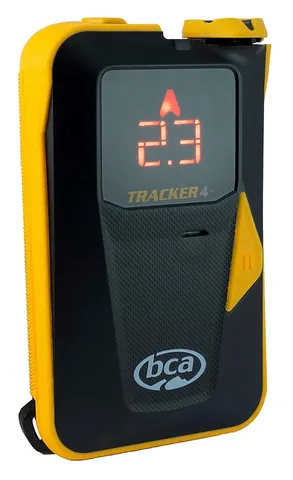
Tracker 4 Avalanche Transceiver
Best OverallMid-range

1. Tracker 4 Avalanche Transceiver

Backcountry Access

$340–$375

The beacon you see in nearly every avalanche course and guide operation for good reason: a sturdy, glove-friendly case and a dead-simple interface that gets a clear search going fast under stress.

Best for: Most recreational skiers and splitboarders who want a reliable, no-fuss beacon

Intuitive, fast real-direction display that's easy to use in a panic · Glove-friendly buttons and rugged housing · Big-pivot mode and signal suppression for multiple burials · Ubiquitous, so partners know how it works

Shorter range (~50 m) than pro-tier beacons · Fewer advanced pro features than a Barryvox

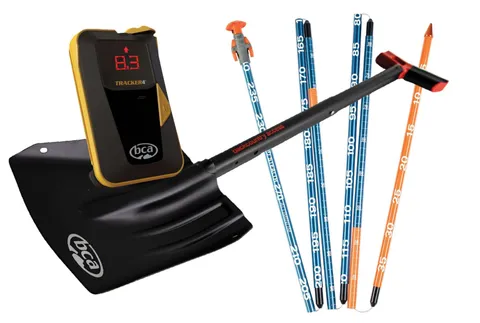
T4 Turbo Avalanche Rescue Package (Tracker 4 + Stealth 300 Probe + Dozer 2H-S Shovel)
Best ValueMid-range

2. T4 Turbo Avalanche Rescue Package (Tracker 4 + Stealth 300 Probe + Dozer 2H-S Shovel)

Backcountry Access

$400–$450

The fastest, cheapest way to fully outfit one person with all three essentials that are proven to work together: beacon, 300 cm probe, and a hoe-mode shovel in one box.

Best for: First-time backcountry buyers building a complete kit from scratch

Complete beacon + probe + shovel trio at a bundle discount · Includes the well-regarded Tracker 4 and Dozer 2H-S shovel with saw option · Long 300 cm probe for deep burials · No guesswork pairing components

Pack not included · Beacon range is mid, not pro-tier

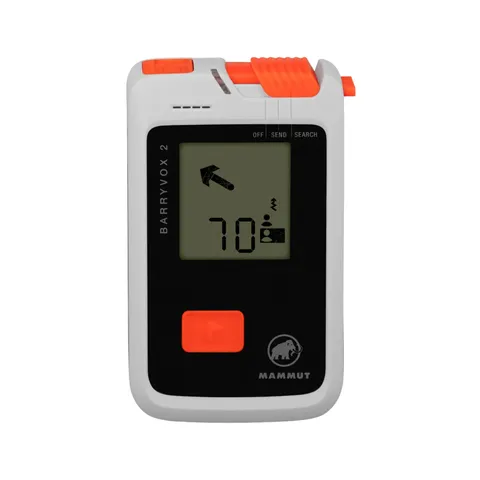
Barryvox 2 Avalanche Transceiver
Best PremiumPremium

3. Barryvox 2 Avalanche Transceiver

Mammut

$430–$500

A refined, fast pro-grade transceiver with a wide 70 m range that means fewer search passes over big debris fields, wrapped in Mammut's intuitive interface and app-based updates.

Best for: Serious tourers, guides, and anyone who wants maximum range and pro features

Wide 70 m search range for faster signal pickup · Excellent multiple-burial handling and self-test · Bluetooth app for firmware, config, and training · Clear, reliable distance/direction readings

Premium price · More features than a casual user strictly needs

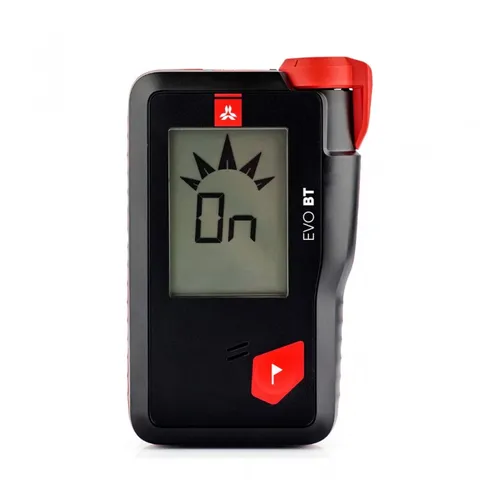
Evo BT Avalanche Transceiver
Mid-range

4. Evo BT Avalanche Transceiver

Arva

$290–$390

A compact, easy-to-use beacon that packs a lot of capability (signal suppression, EMI warning, group-check on startup, and Bluetooth), into one of the better values on the market.

Best for: Value-focused buyers who still want modern features

Strong ~60 m stated range for the price · Group-check mode and audible EMI interference warning · Compact and light · Bluetooth connectivity for updates

Less common than BCA/Mammut, so fewer partners know it · Interface less polished than top picks

Diract Voice Avalanche Transceiver
Editor's PickMid-range

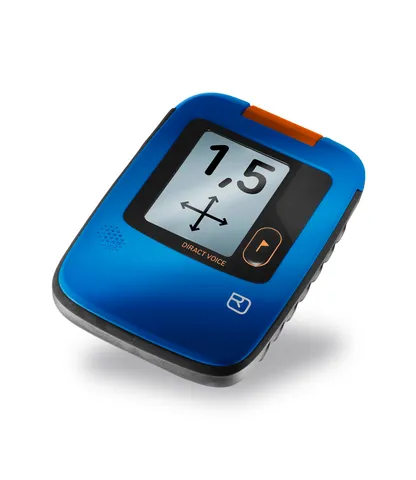
5. Diract Voice Avalanche Transceiver

Ortovox

$400–$450

The voice-guided beacon that talks you through a search, our brains process spoken cues faster than screens under stress, which can shave precious seconds off a rescue.

Best for: Newer backcountry travelers who want maximum guidance during a search

Spoken voice navigation reduces panic and search errors · Rechargeable internal battery via USB-C · Smart antenna technology and clear interface · Auto-revert to send mode

Voice can feel slow to experienced searchers · Rechargeable battery means remembering to charge it

Transfer Avalanche Shovel
Best BudgetBudget

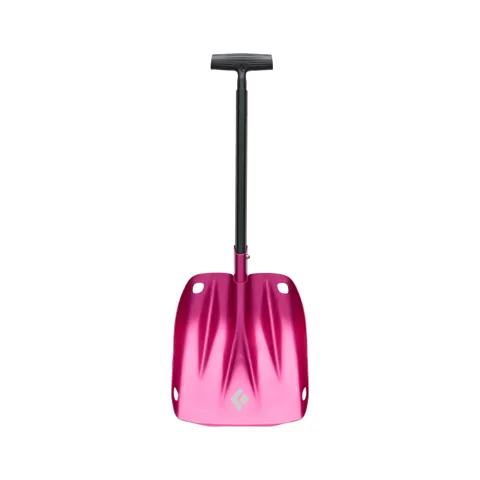
6. Transfer Avalanche Shovel

Black Diamond

$55–$70

A fully featured, durable aluminum-bladed shovel at one of the lowest price points on the market, the standard-bearer for anyone getting started.

Best for: Budget-conscious buyers who refuse to compromise on a metal blade

Strong metal blade that handles concrete-like debris · Among the cheapest quality avalanche shovels · Extendable shaft, packs down well · Trusted, widely available design

Heavier than premium carbon/ultralight options · No hoe mode on the base model

Stealth 240 Carbon Avalanche Probe
Budget

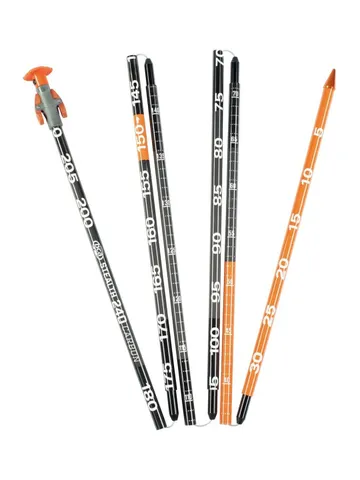
7. Stealth 240 Carbon Avalanche Probe

Backcountry Access

$60–$75

A minimalist, full-strength carbon probe that's incredibly light, compacts small, and deploys quickly, proven reliable season after season.

Best for: Weight-watchers who want a packable carbon probe without overspending

Lightweight, stiff full-carbon construction · Compacts down small for the pack · Quick, reliable cord-tension deployment · Affordable for a carbon probe

Cord-lock feels less bombproof than Mammut/BD locking systems · 240 cm may be short for very deep snowpacks

Float E2 Turbo 25 Avalanche Airbag Pack
Premium

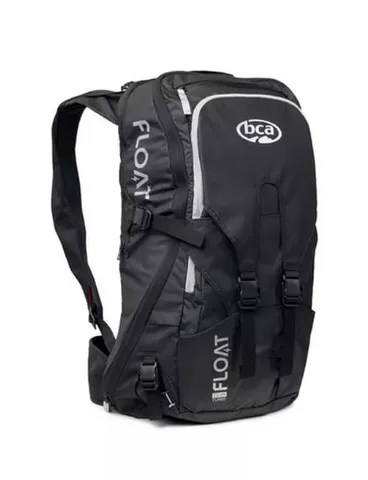
8. Float E2 Turbo 25 Avalanche Airbag Pack

Backcountry Access

$700–$900

The evolution of BCA's airbag line, pairing the reliable Alpride E2 supercapacitor system, recharges via USB in under 40 minutes, with a genuinely well-designed touring pack at a competitive price.

Best for: Backcountry skiers who want a no-canister airbag at a fair price

Electric supercapacitor system: unlimited practice deploys, USB recharge, no canister · Travel-friendly (no compressed-gas hazmat hassle) · Strong value among electric airbags · Practical 25 L touring layout

Heavier than top-end LiTRIC packs · Supercapacitor needs charge management before tours

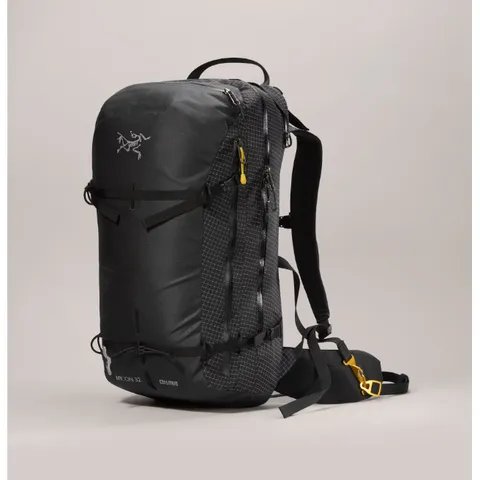
Micon LiTRIC 32 Avalanche Airbag Pack
Best PremiumPremium

9. Micon LiTRIC 32 Avalanche Airbag Pack

Arc'teryx

$1,500–$1,700

The lightest fully-featured airbag pack on this list, built on the electric LiTRIC fan system co-developed with Ortovox, premium carry, premium price.

Best for: Committed backcountry skiers who want the lightest, most refined airbag

Lightest fully-featured airbag in its class · Electric LiTRIC fan: rechargeable, flight-friendly, multi-deploy · Excellent Arc'teryx harness and carry comfort · Roomy 32 L for bigger days

Very expensive · More pack than short-tour skiers need

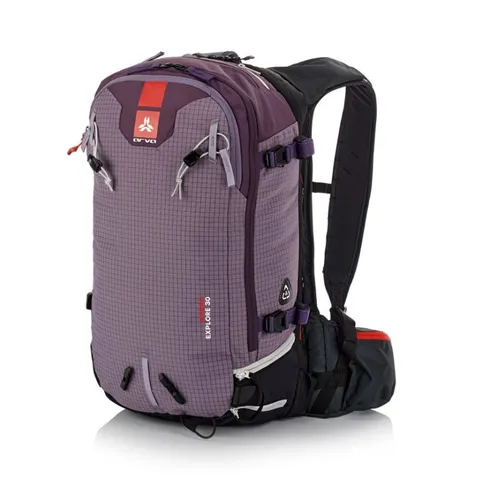
Explore 30 Switch Avalanche Airbag Pack
Premium

10. Explore 30 Switch Avalanche Airbag Pack

Arva

$750–$850

A standout value among airbags thanks to a modular design that swaps between 30 L and 40 L on the same base unit, light for quick missions, expandable for big tours.

Best for: Tourers who want one airbag that flexes between short and long days

Modular 30/40 L volume on one airbag base · Strong overall value versus other airbag systems · Versatile for both day tours and bigger objectives · Well-rounded touring features

Canister-based system to manage versus electric rivals · Heavier than ultralight LiTRIC packs

How we choose

We ranked by genuine life-safety value and real-world usability for recreational skiers and snowboarders, not by price. The essential beacon/probe/shovel trio is weighted most heavily because it is what actually performs a companion rescue; airbag packs follow as the high-value upgrade for committing terrain. Within each piece of gear we looked at search range and multiple-burial handling for beacons, deployment speed and stiffness for probes, blade strength and packed size for shovels, and weight, system reliability, and travel-friendliness for airbags: cross-referencing hands-on testing from Ski Magazine, OutdoorGearLab, GearJunkie, Treeline Review, and BeaconReviews.com against manufacturer specs. Tiers reflect each item's street price: budget covers sub-$100 essentials, mid covers most full-featured transceivers and rescue packages, and premium covers pro-grade beacons and airbag systems. We accept no payment from manufacturers for placement or rank; retailer links may earn a commission but never influence the editorial picks, and nothing here is included that we wouldn't carry ourselves.

Common questions

A digital avalanche transceiver (beacon), a collapsible probe at least 240 cm long, and a metal-bladed avalanche shovel, every single person in your group, every time you leave the resort gates into uncontrolled terrain. One person carrying gear does nothing if their partner is the one buried. A rescue package that bundles all three (like the BCA T4 Turbo) is the cheapest way to outfit one person and guarantees the pieces work together.

An airbag is a valuable supplement, not a substitute for the trio. It uses inverse segregation to help keep you on top of moving debris, improving survival odds in many slides, but it does nothing against trauma or terrain traps, and roughly 1 in 5 deployments fails to prevent burial. If you regularly travel in steep, consequential avalanche terrain, it's worth the weight and cost. If you're newer or stick to lower-angle tours, spend that money on a course and practice first.

Electric systems (Alpride E2 supercapacitor, Arc'teryx/Ortovox LiTRIC fan) let you practice-deploy as often as you like, recharge over USB, and fly without hazmat paperwork or canister refills, a big convenience win. Canister systems (BCA Float, older Mammut) are proven, often cheaper up front, and don't depend on battery charge, but a used or international refill can be a hassle. For most traveling skiers in 2026, electric is the more practical choice; canisters still make sense on a budget.

Modern recreational beacons advertise 50–70 m, but real-world effective search-strip width is narrower and the spec mostly determines how wide you can space your initial search pattern. More range means fewer passes and slightly faster signal acquisition over a big debris field. For most users a 50–60 m beacon (Tracker 4, Arva Evo BT) is plenty; pros, patrollers, and photographers carrying lots of electronics benefit from the 70 m range and stronger EMI handling of a Barryvox or Pieps Pro.

For probes, carbon is lighter and stiffer for a fast confident strike but pricier; aluminum is more durable and budget-friendly and works fine for most. Get 240–300 cm, shorter probes leave you digging blind on deep burials. For shovels, always choose a metal (aluminum) blade, never plastic, because avalanche debris sets up like concrete; an extendable shaft and a 'hoe mode' dramatically speed up moving snow when seconds count.

A used metal shovel or probe is generally fine if undamaged. A used beacon is riskier. Check the firmware version, battery contacts for corrosion, and that it's a modern three-antenna digital model (avoid analog or single-antenna relics). Used airbags require extra caution: verify the trigger system functions, the bag is intact, and for canister types that you can actually source refills. When in doubt with anything electronic or life-critical, buy new.

Some links are affiliate links, and we may earn a commission at no extra cost to you. It never affects our rankings.

In your pocket

Take the whole mountain with you.

Free, no account needed. Run maps, GPS run tracking, and mountain webcams in your pocket.

  • Every resort and ski school in your pocket

  • Named runs and lifts drawn on the map

  • GPS-track every run, hands-free

  • Live webcams before you commit to the drive

The Ski Hubs app dashboard

For operators

Run a ski business?
Get on the map for free.

Claim your free listing for a branded page and a spot in the Ski Hubs app, then add bookings and digital waivers whenever you’re ready. No setup cost.