Colorado's ski resorts define high-elevation, consistent snow seasons and sprawling terrain that rewards both quick resort runs and multi-day exploration across entire mountain ranges. The state's concentration of I-70 resorts (Vail, Beaver Creek, Breckenridge, Keystone, Copper Mountain) makes them accessible from Denver, while the Aspen cluster and remote outposts like Telluride cater to different trip priorities, commute vs. isolation, groomed vs. steep, resort crowds vs. backcountry runs. This guide breaks down Colorado's hierarchy: the traffic leaders, the value plays, and the high-commitment destinations that reward the drive. Vertical matters less here than aspect and storm cycles; Colorado's dry Rockies produce consistent, forgiving snow compared to Pacific ranges, which lets mid-tier resorts punch above their reputation.
Vail & Beaver Creek: High-Speed Access and Consistency
Vail's sheer scale and sprawling lift-served terrain across multiple peak faces anchor Colorado skiing for half the vertical's traffic. The backside bowls and glades deliver solid powder stashes after storms, while the front side's blue-run networks handle beginner and intermediate skiers all day without choking. Beaver Creek, Vail's sibling just 10 miles away, skips the sprawl in favor of compact, obsessively groomed terrain that prioritizes sightline and fall-line consistency; its reputation as a "luxury resort" rests partly on grooming discipline that other Colorado areas treat as optional.
Both resorts expect crowds during holiday weeks and weekends. Vail's single biggest liability is that consistency brings sameness: blue runs blend into each other, and the resort's marketing has made it the reference point for people who've never skied anywhere else. If your trip is two days and you fly into Denver, Vail is the default. If you're comparing Colorado's actual best skiing, use it as the baseline: high-quality resource, fair conditions, not the peak of Colorado's ski culture. For guide operations, both resorts handle high-volume client rotations without logistical friction, which is why they absorb most commercial traffic.
Breckenridge: Terrain Density and Resort Town Amenities
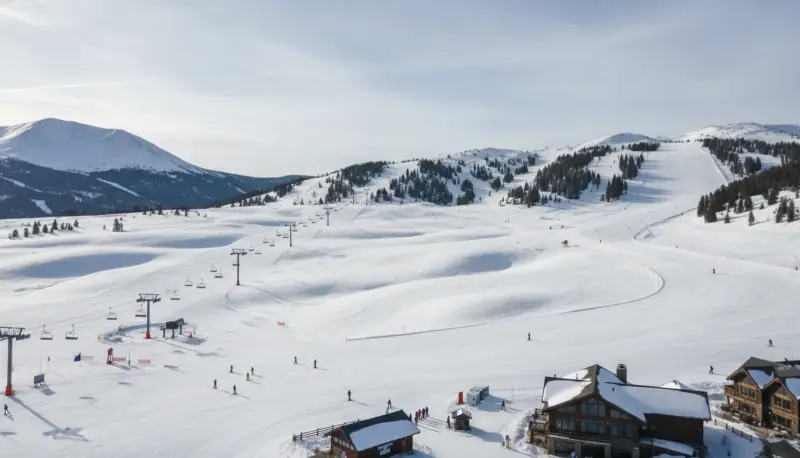
Breckenridge trades sprawling acreage for intelligent layout: five interconnected peaks, Peaks 6 through 10, served by three base areas (Peaks 7, 8, and 9) and linked by lifts, with Peaks 6 and 10 reachable only by chair from within the network. Each peak carries different aspect exposure and snow-preservation characteristics. Peak 8 holds cold, north-facing glade snow; Peak 9 hosts terrain parks and learner zones; Peak 10 and above open steep, rocky lines that only materialize after big storms. The village itself (a walkable, historic mining town with bars, gear shops, and restaurants), is a structural advantage many Colorado resorts lack; you can ski in the morning, walk to lunch, hit a second run, and eat dinner without a car.
For operators running ski schools or guiding programs, Breckenridge's density means you can land beginners on Peak 9, intermediate groups on Peak 8, and strong skiers on the north-side gullies, all while clients leave skis at the same base. The resort's lift infrastructure is aggressively modern, and sightlines from the village to the terrain make it feel engaged rather than isolated. Intermediate skiers find more terrain variety here than at any I-70 resort because the peaks genuinely ski differently; an intermediate can run upper Peak 9 one run and tuck into glades another, all without navigating confusing quad patterns. High elevation and north-aspect preservation mean Breckenridge snowballs better after late-season storms than lower neighbors.
Aspen-Snowmass: Backcountry Character and Vertical Spread
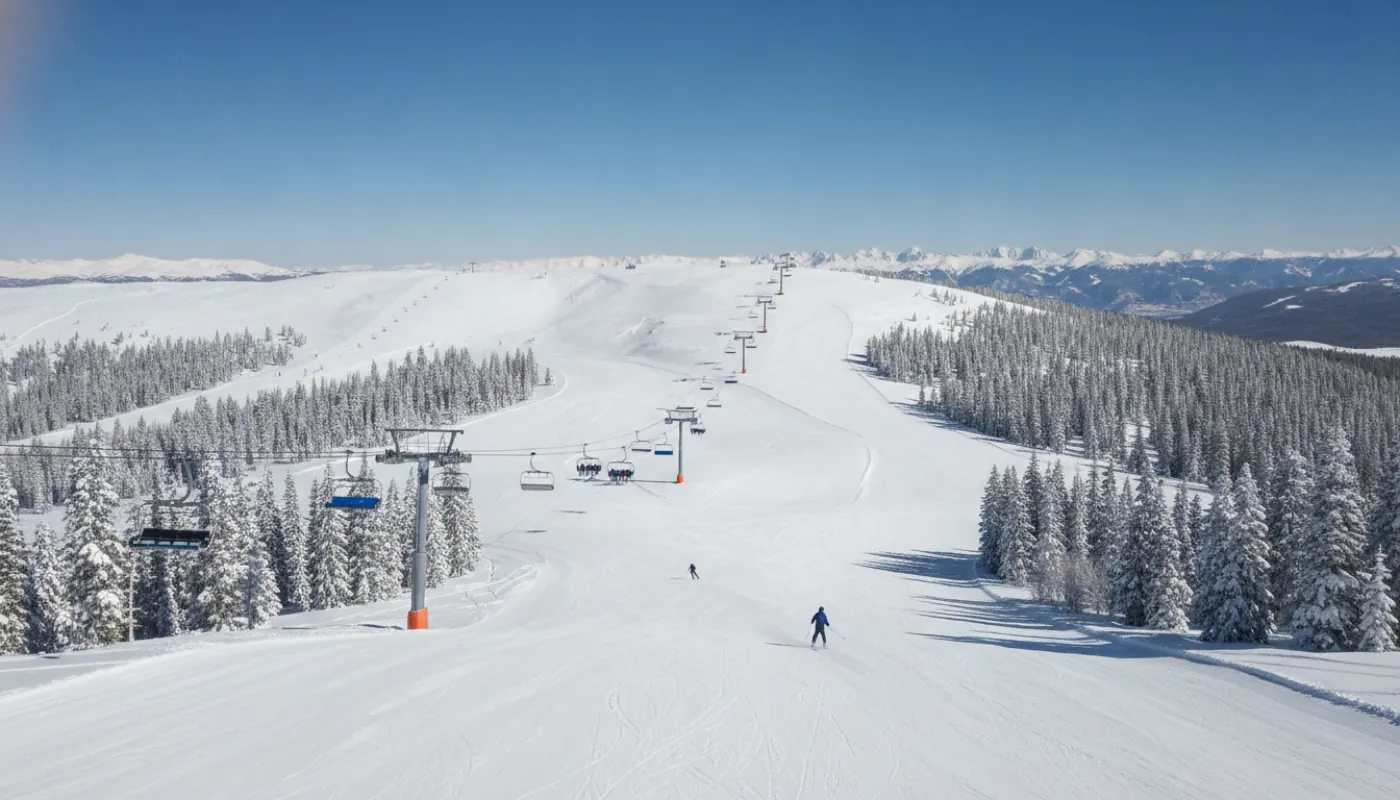
Aspen-Snowmass is a four-mountain system spread around Aspen: Aspen Mountain rises right above downtown, Aspen Highlands and Buttermilk sit just outside town, and Snowmass lies about 8–12 miles west and is the largest of the four by acreage. The steepest consistent in-bounds terrain is at Aspen Highlands (Highland Bowl, Steeplechase) and on Aspen Mountain; Snowmass's Big Burn, by contrast, is the system's signature intermediate cruising zone. The distance from Denver (3+ hours) filters casual travelers, which preserves a different clientele: skiers who've already logged seasons elsewhere, mountain guides stashing ski days during summer work, and operators running multi-day trips who need terrain that doesn't feel recycled from a dozen other resorts.
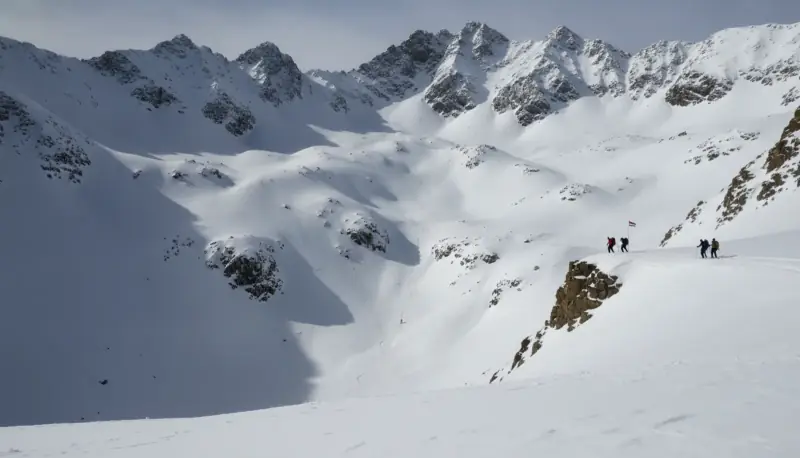
Aspen's backcountry access is the real competitive advantage: the terrain transitions naturally into the Maroon Range backcountry, and operations can pitch combination weeks (three days in-bounds, three days out) without feeling forced or overextended. Snowmass itself skis long and mellow in ways Vail's density can't match; a single run from the summit rambles for genuine vertical stash. The trade-off is that reaching the marquee steep terrain, Aspen Highlands' Highland Bowl, takes a 30–45 minute boot-pack from the top lift, not just quad rides; Big Burn, by contrast, is lift-served intermediate terrain. Many guide services base 20–30 miles south and use Aspen-Snowmass as a three-day-per-week rotation. The snow is reliable, Maroon Range storms are fierce, and the altitude preserves late season better than lower I-70 areas.
Secondary Options: Copper, Keystone, Telluride, and Loveland
Copper Mountain compresses Breckenridge's peak-focused design into a smaller package with competitive lift speed and terrain-park investment; it reads as a "value I-70 alternative" for operations stretched across multiple resorts. Keystone's night-skiing operation is unique, running lights into the evening (currently to 7 PM on select nights) extends the usable day, and its elevation preserves snow after early-spring warm spells better than lower neighbors. Both are reliable workhorses for multi-day rotations.
Telluride sits at the extreme: a true jeep-town aesthetic, genuine extremes through an official extreme terrain zone that drops directly into national forest sidecountry, and isolation (roughly 6.5–7 hours and about 330 miles from Denver, with no I-70 shortcut). It's a one-way trip for ops and guides, not a three-resort weekend. But if your operation is built around multi-day trips and clients who want "real mountains," Telluride's character and connected backcountry are unmatched in Colorado. Loveland sits directly above I-70, close to Denver, with no base village and bare-bones grooming that preserves fresh snow longer than corporate resorts; it's the choice for locals dodging crowds and operations running high-frequency client rotations on short notice.
Planning Your Colorado Ski Week
Colorado's structural advantage is that a single operation can staff multiple resorts within 90 minutes, stacking inventory across different terrain types without needing a second physical location. Intermediate-heavy groups migrate between Breckenridge and Keystone; guide-focused operations rotate Vail's backside, Copper's glades, and the sidecountry around Aspen. Powder skiers hit Loveland first for fresh snow, then backfill with Beaver Creek's grooming if the storm cycle gaps. The real Colorado edge isn't a single "best" resort, it's the combination depth and proximity. Season passes spanning multiple mountains let you chase conditions across the range, and the highway distance to reach resorts means you're not starting from scratch on Tuesday if conditions shift. Know your client base, match the peak-and-base structure to your group's ability, and use the geography to compound advantage: that's how Colorado guides and schools outwork resorts that see the mountains as isolated destinations.