Most ski patrol staffing problems aren't about pre-season recruiting. They're about the third week of January, when a patroller quits over a personal issue and you're suddenly short-staffed on the busiest weekend of the year.
Mid-season hiring is its own discipline. You don't have the November onboarding window. You don't have the pre-season hill walks. And the candidate pool is narrower, anyone who wanted to patrol this winter is already patrolling somewhere.
This is a working playbook for hiring a patroller in season, written from conversations with patrol directors who have been through it.
Where mid-season candidates actually come from
The off-season pool (fresh OEC graduates, college kids), is gone by January. Mid-season hires almost always come from one of four sources:
- Returning patrollers from other resorts who had a falling-out, a schedule conflict, or a layoff at their first resort.
- Pro patrollers who took a year off and decide mid-winter they miss the work.
- Volunteer patrollers at the same or nearby resort who can step up to a paid role.
- OEC-certified candidates with non-patrol jobs (paramedics, fire personnel, search and rescue) who want a winter side gig.
The first two are the highest-value. They come with the operational reflexes that take rookies six months to develop.
Sourcing them mid-season:
- NSP regional contacts. The regional NSP rep almost always knows who's available.
- Patrol director WhatsApp / text networks. Most regional patrol directors are in informal groups. A "we're hiring, anyone available?" post produces real candidates within hours.
- Adjacent-mountain patrol rosters. Your nearest competitor knows who left their roster.
- The avalanche education community. AIARE Pro instructors often know who's available and credible.
What doesn't work mid-season: job boards, Indeed posts, college recruiting. Those are pre-season tools.
Minimum credentials: don't compromise
The credential floor for any patroller:
- OEC certification current, annual refreshers up to date. OEC runs on a three-year curriculum cycle with a refresher every season; a patroller who missed a yearly refresher is no longer a certified OEC Technician even if the original course was recent, so verify current status, not just the course date.
- CPR certification current.
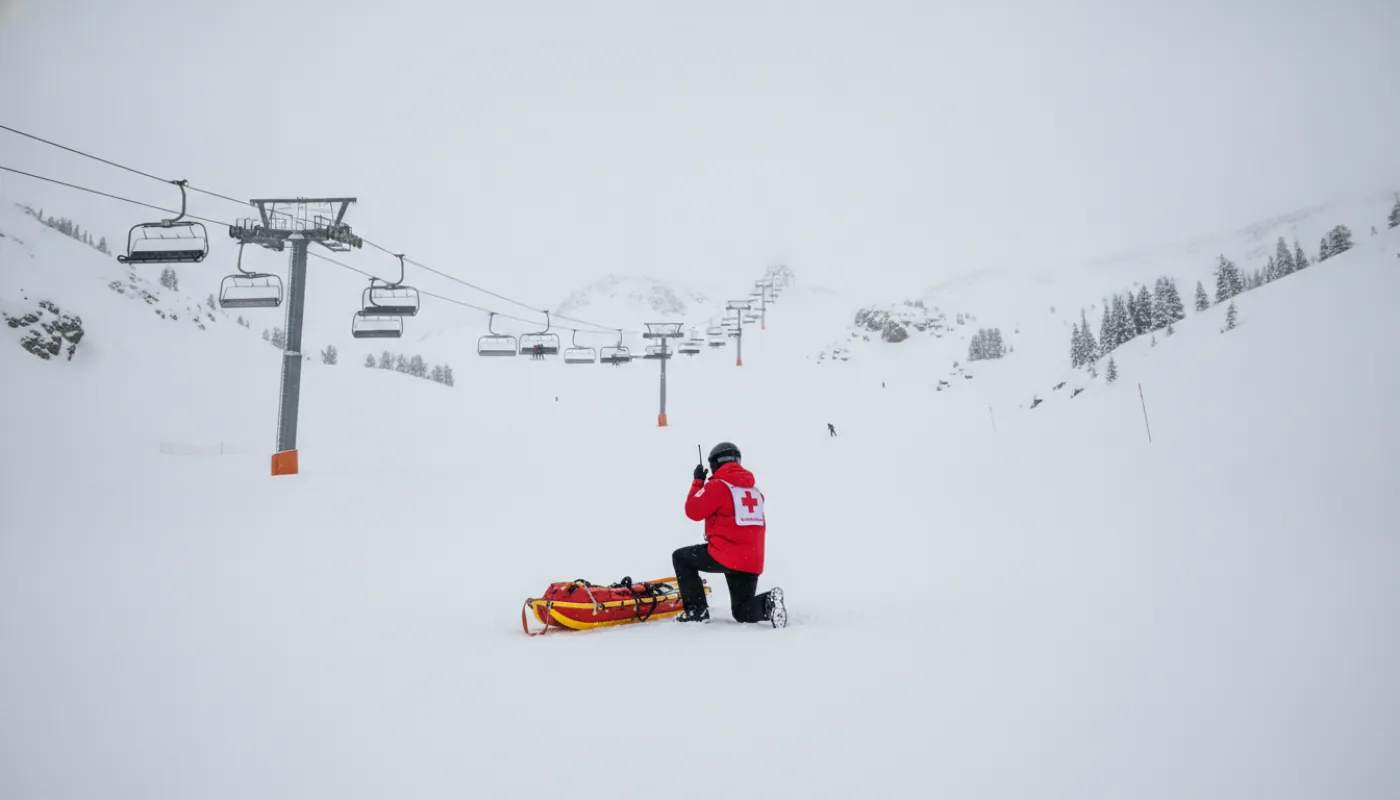
- Toboggan handling demonstrated at hire, not just claimed on a résumé.
- Lift evac familiarity, at minimum, willing to be trained on your specific lift system.
Mid-season hiring temptation: skip the toboggan check because you need the body now. Don't. A patroller who can't manage a loaded sled on your mountain in your conditions is going to hurt someone. The toboggan check takes 30 minutes. Do it.
Specialty roles to verify separately:
- Avalanche control: Pro 1 or equivalent, plus blaster's card if relevant.
- Lift evac lead: specific training on your lift type.
- First-response medical: EMT or paramedic where state regulations require.
The fast-track onboarding
A new mid-season hire can't do the same week-long November onboarding. What they need instead:
Day 1 (off-snow, ~4 hours)
- Resort policies, radio protocols, incident report procedure.
- Trail map walkthrough with names that match the radio communications.
- Aid room tour, supply layout, AED locations.
- Resort-specific emergency procedures (lift evac, lost child, missing skier, mass casualty).
- Run cards, opening/closing procedures.
Day 2 (on-snow with mentor)
- Hill orientation by chair, with stops at high-incident locations.
- Trail-by-trail run-throughs, focusing on terrain features and known problem areas.
- Aid-station setup and tear-down at minimum 3 locations.
- Toboggan check on at least one black-diamond run, regardless of claimed experience.
Days 3–5 (mentored patrolling)
- Paired with a senior patroller. Not handling sleds alone yet.
- Observing incident response. Filing one report under supervision.
- Lift evac familiarization (off-line at minimum, full drill if scheduled).
Day 6+ (assessment + release)
- Patrol director sign-off on solo patrolling.
- Continued mentor availability for first 2 weeks.
Five days is the floor. Compressing below this is where mid-season hires fail.
Pay and contract: be straight
Mid-season patrollers know they're filling a hole. Be honest about it.
- Pay at the high end of your scale. Mid-season hires fill an acute need; pay the premium.
- Offer a season-end bonus contingent on completing the season. This is the lever that holds them through March.
- Be clear about housing. If you have staff housing, say what's available. If not, help them find local options.
- Lay out the schedule. Mid-season hires are often filling in around the existing roster, give them stable shifts, not the leftover slots.
- Spell out the gear situation. Resort patrol jacket and radio you'll provide; ski boots and skis they'll bring. State-specific: avalanche gear, when relevant.
The operational mistakes patrol directors make
Five mid-season-hiring mistakes that come up consistently:
1. Skipping the toboggan check
"They've patrolled at Vail for 5 years." Fine. Check them anyway on your mountain. Conditions, terrain, and runout differ. The check is non-negotiable.
2. Putting them solo too fast
A new patroller solo on a busy Saturday after 3 days of onboarding will miss something they shouldn't. Three Saturday solo shifts before busy weekends.
3. Not introducing them to existing patrol
The new hire is parachuting into a tight team. Introduce them in writing (a Slack/email post with a photo and 3 sentences of background) before they show up. Senior patrol getting a "who's that?" radio call on day one is exactly the dynamic that drives mid-season hires out by week three.
4. Underestimating the cultural fit
Patrol is a small-team operation. A technically excellent patroller who doesn't fit the team causes more problems than they solve. The reference check matters more than the credential check. Call the previous patrol director, not just listed references.
5. No exit clause
Sometimes the mid-season hire doesn't work out. Build a probationary period (2 weeks is fair) and a defined "if either party decides this isn't working, we part with X days' notice." Most resorts don't, then have to manage the awkward firing months later.
When the answer is "we don't hire: we redistribute"
The honest mid-season alternative: don't hire. Instead:
- Pull volunteer patrol up to filling paid shifts (where regulations allow).
- Adjust schedules so existing pros cover gaps with overtime.
- Cut hours of operation on the slowest weekday, a 9 AM open instead of 8:30, or 4 PM close instead of 4:30.
- Adjust trail openings, close terrain that requires patrol coverage you can't staff.
These are all unattractive options. But a half-staffed patrol on a busy day is a worse option than a fully-staffed patrol with reduced terrain.
The post-season debrief
After every mid-season hiring event:
- Was the patroller still on the roster at season end?
- Did onboarding take the time it should have?
- What went wrong (or right) with the original loss that triggered the hire?
- What can pre-season recruiting do to make this less likely?
Most resorts run one mid-season hire per season. The ones that learn from each one stop having them every year.
If you run a ski resort or patrol operation and want to manage staff, schedules, waivers, and incident reports in one place, list your operation on Ski Hubs, the operator cockpit was built for exactly this kind of roster-and-records problem.