Buying your first pair of skis is a significant investment that directly affects your learning curve and long-term enjoyment. A proper fit goes far beyond grabbing whatever's on sale, it requires understanding how ski specifications translate to real-world performance. Beginners often overspend on advanced skis designed for expert terrain or underestimate how much a poor fit slows progress. The goal isn't to find the "best" ski in an absolute sense, but the best ski for your weight, height, ability level, and where you actually plan to ski. This guide breaks down the key variables you'll encounter and helps you make a confident first purchase.
Ski Length: Getting the Foundation Right
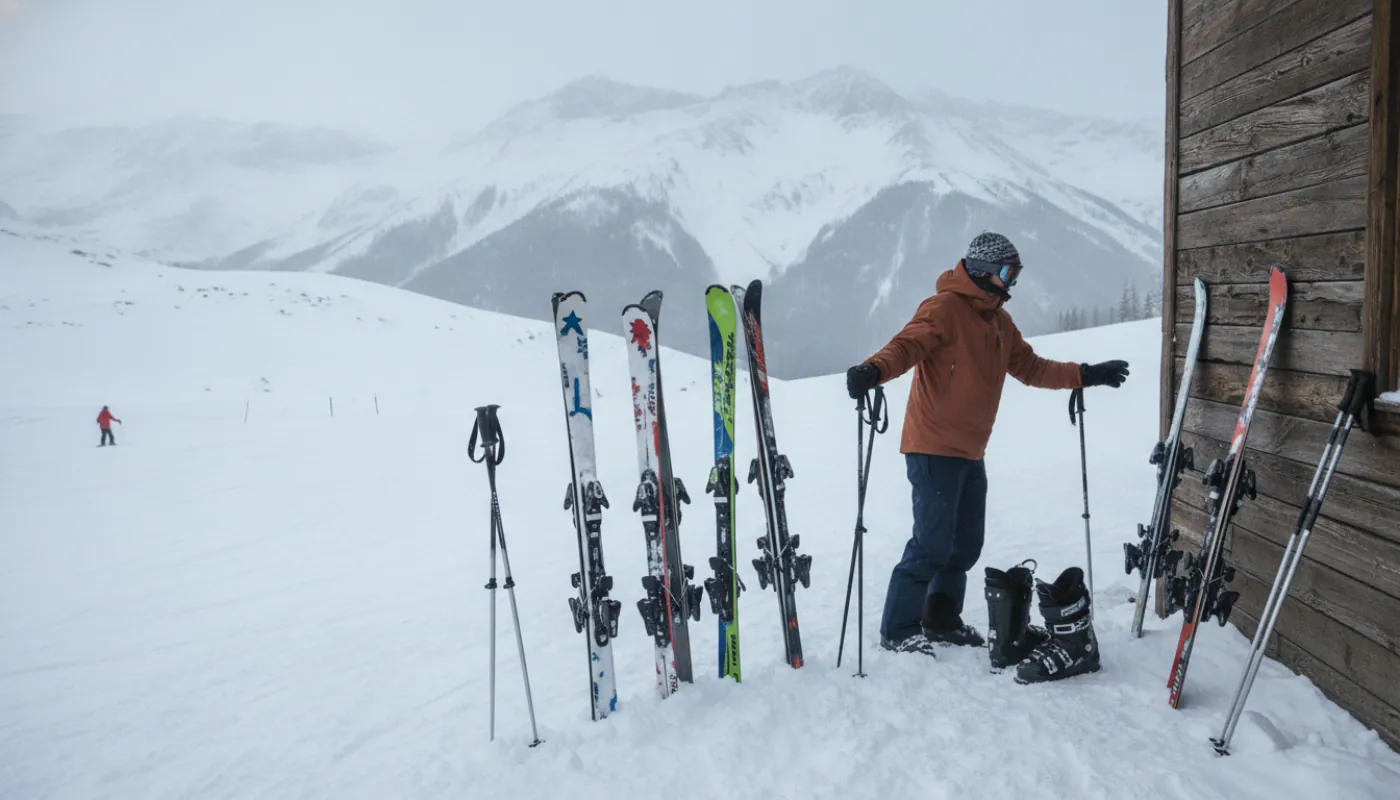
Ski length is determined by your height, weight, and ability. A foundational rule for beginners is the chin-to-nose rule: stand your skis upright and they should reach somewhere between your chin and your nose. Shorter is easier, erring toward chin height keeps the ski forgiving while you learn. This conservative starting point favors maneuverability and control, exactly what a new skier needs. Shorter skis are easier to turn, require less leg strength, and forgive wider radius mistakes. As you progress, you can increase length to gain edge hold and stability at higher speeds.
Weight matters as much as height. A lightweight skier on skis designed for a heavier rider will find them sluggish and hard to initiate turns. A heavy skier on light skis won't get enough pressure distribution for proper edge engagement. Most ski manufacturers provide weight ranges in their spec sheets, and staying within that range is non-negotiable. If you're at the boundary between two sizes, favor the shorter ski at this stage of your progression. The confidence boost from easier turning outweighs the minor loss in speed stability.
Ski Width and Terrain Specificity
Ski width, measured underfoot (at the waist), determines how the ski interacts with different snow conditions. Waist widths range from 70 to 120+ millimeters. Beginners should focus on the 75–90mm range for all-mountain versatility. Skis in this sweet spot handle groomed runs well enough to learn fundamentals, yet still float adequately in softer snow. Avoid ultra-narrow race skis (under 70mm) and wide powder skis (over 100mm) for your first pair, they're specialized tools that make harder work on the conditions you'll encounter most.
All-mountain skis (generally around 85–105mm underfoot, with beginner-friendly models at the narrower 75–90mm end), are engineered to do one job acceptably across varied terrain rather than dominating a single condition. They're the beginner's workhorse because they eliminate the constant "am I on the right equipment" self-doubt. Powder-specific skis require aggressive movements and edge control most beginners lack. Carving skis designed for hard groomers punish any deviation, making them frustrating on anything but perfect grooming. An all-mountain option gives you a ski that responds predictably whether the run is icy, soft, or slushy.
Flex and Forgiveness: Why Softer Matters Now
Ski flex, how much the ski bends under pressure, isn't a standardized number the way boot flex is. Most brands simply describe a ski as soft, medium, or stiff, and the few that print an in-house numeric rating use a scale that doesn't carry across manufacturers, so don't go hunting for a specific "3-out-of-10" ski. What matters is the direction: beginners universally benefit from softer skis. A soft ski initiates turns with less force and forgives imperfect edge angles. It won't punish a locked-up knee or a late weight shift the way a stiff ski will. Stiff skis demand precision and explosive edge pressure, skills you're still developing.
The psychological difference is real. Soft skis reward you immediately when you try something new. You turn slightly earlier than planned and the ski complies instead of fighting back. That immediate feedback accelerates learning because you spend less time battling the equipment and more time understanding what your body should be doing. Stiff skis demand that you solve the problem with perfect technique first, then reward you. For a new skier, that's backwards. Flex your way toward confidence first; you can graduate to stiffer skis once you're linking parallel turns on moguls and steeps.
Testing Before You Buy
The best spec sheet in the world won't tell you how a ski feels underfoot. Rental shops and mountain demo programs exist specifically to solve this problem. Many resorts offer demo days where you can try 3–5 different skis from various brands for a single day fee. This $30–50 investment is the cheapest insurance you'll buy. You get real terrain feedback, not speculative internet research. Pay attention to how easy the ski is to turn, whether you're fighting to keep an edge on groomers, and whether you feel in control or overwhelmed at moderate speeds.
When testing, wear the same layers and boots you plan to ski in regularly. A ski that feels great in shorts and a t-shirt might behave differently in a full winter kit. Ask the rental attendant whether a ski is known for being playful or stable, stiff or forgiving, staff at resorts see every skier profile and can match you to something that's worked for similar students. Don't let ego inflate your selection. If a ski feels easier and more fun, that's the right ski, regardless of what you'd hoped to graduate into.
Renting Versus Buying: The Financial Question
Buying skis immediately makes sense if you're confident you'll ski 10+ days per season and you've had a few lessons or weeks of experience. If you're genuinely uncertain, rent for your first season. Rental shops don't have financial incentive to oversell you, they need repeat customers, and setting a beginner on equipment that's too aggressive hurts retention more than it helps. A year of rental lets you develop taste in how different skis behave and gives you concrete data on frequency before you lock in a purchase decision.
When you do buy, expect entry-level all-mountain skis to cost $400–800, not including boots. Boots are a separate decision with equally important fit considerations and often cost $200–500. Bindings add another $150–300. The total package for a complete beginner setup lands around $800–1500. This is a genuine investment, but if you're committed to regular skiing, the daily cost per use within a few seasons justifies the outlay. Check end-of-season sales (April–May) for discounts on the current year's models, retailers mark down inventory heavily to clear stock before summer.
The Bottom Line
The right first ski isn't the most capable one on the wall: it's the one matched to your weight, height, and current ability, sized short enough to forgive your mistakes. Favor a slightly shorter length, an all-mountain waist in the 75–90mm range, and a softer flex, then demo before you commit. Get those fundamentals right and your equipment will accelerate your progress instead of fighting it.