The jump from blue runs to black diamonds intimidates every intermediate skier, and for good reason. Black diamonds demand precision, speed control, and the ability to handle consequences when something goes wrong. But progression isn't magic; it's a series of small, repeatable skills that build on each other. Most intermediates can ski black diamonds within a season or two if they focus on the right techniques and know where to draw the line between ambition and safety.
Understand What Makes Black Diamond Terrain
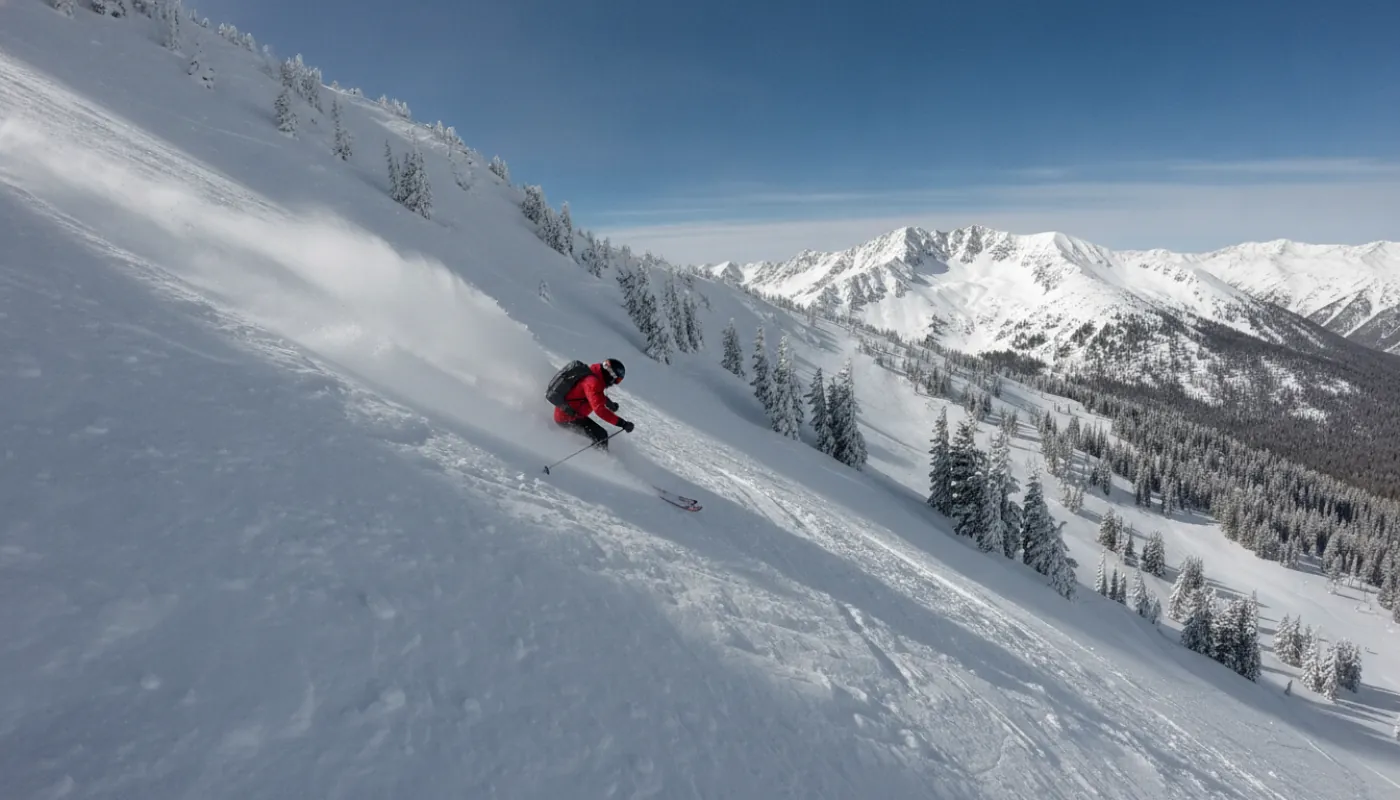
Black diamond runs aren't just steeper blue runs. They generally run steeper than about 25–30 degrees, often into the 30–40 range, where most blues sit around 15–25, and they add tighter trees, moguls, or technical rock and demand that you nail your line on the first try. One caveat on those numbers: trail ratings are relative to each resort, not a national standard. A black at a big western mountain can out-pitch a black back East, so treat the color as that mountain's own scale, not a fixed degree count. The margin for error shrinks dramatically. A washout on a blue run means sliding into a flat area or dodging a few trees. A washout on a black diamond can mean a serious fall or getting stuck in terrain you didn't want to enter.
The psychological shift matters as much as the technical one. On blue runs, you can afford to be sloppy. You can drift across the fall line, make awkward turns, and still end up at the bottom in one piece. Black diamonds won't tolerate that. They demand intention: every turn should have a purpose, every speed adjustment should be deliberate, and your line should start forming in your head before you push off. This precision focus is actually where many intermediates stumble, not because they lack the skill, but because they haven't internalized that sloppy skiing stops working at this gradient.
Master Your Edge Control on Steep Terrain
The foundation of black diamond skiing is edge control, your ability to angle your skis and hold them there without skidding or slipping. On gentle blues, you can muscle through poor technique. On blacks, you can't. Your edges have to grip.
Start by drilling carving on blue runs until it feels automatic. A carved turn, where your skis track a clean arc without sliding sideways, gives you maximum grip and control. The key is early edge engagement: tilt your ankles and knees into the hill the moment you initiate the turn, not halfway through it. Intermediate skiers often wait too long, building momentum before committing to the edge. On black diamonds, that delay costs you because the slope is already accelerating you downhill.
Once you're confident carving blues, practice aggressive pressure management. The key is to balance on your outside ski, the one on the outside of the turn. It starts the turn as your uphill ski and finishes it as your downhill ski, and it should carry most of your weight the whole way around; at the transition between turns you hand that pressure over to the new outside ski. Most intermediates don't commit to the outside ski. They sit back, stay centered, or lean on the inside (uphill) ski, and their edges wash out. Lean forward at your ankles (not your waist: that's a common mistake), feel your shin press against the boot's tongue, and let that outside leg do the work. On blacks, this forward pressure keeps you on edge even as the hill tries to buck you off.
Build Confidence on Steeper Pitches Gradually
Jumping straight from blues to blacks is how people get hurt. Instead, seek out black-diamond runs that have a gentler top section, or find resorts with runs rated black but groomed regularly. Many resorts have "easy blacks", runs that meet the black diamond threshold technically but aren't as sustained or rocky as others. These are your training ground.
Start by doing one black run per day, when you're fresh and alert. Don't try to string together five blacks in a row when you're tired; fatigue breeds mistakes, and mistakes on blacks have real consequences. After you've done one confidently, take a break, ski some blues to rebuild your confidence, then consider another black if you're feeling good.
The mental game here is honesty with yourself. Black diamonds require you to assess your state: are you tired, cold, rattled from a near-miss, or still sharp? A good skier knows when to leave the mountain. That's not weakness; that's judgment. Many intermediate skiers push too hard because they're embarrassed to ski blue runs, but a bad fall teaches harder lessons than anything else. Respect the terrain, and the terrain will teach you efficiently.
Practice Line Selection and Speed Management
On a blue run, multiple lines work fine. On a black diamond, your line is everything. Before you drop in, take 10 seconds to read the run: Where are the rocks, the moguls, the trees? Which side of the run sets you up for the next pitch? What's the fall line, and how are you going to control your descent along it?
Speed control on blacks is about micro-turns and aggressive braking. Instead of making wide, slow turns (the blue-run default), you'll use tighter, more frequent turns. Each turn bleeds speed by angling your skis across the fall line. On a 35-degree pitch, you can't afford to point straight downhill for more than a second or two. You'll accelerate too fast and lose control. The rhythm is turn, bleed speed, turn again, bleed speed. It sounds frantic, but it becomes rhythmic with practice.
If you find yourself going too fast, the answer is turn shape, not pointing straight and hoping. But get one distinction right: a controlled skid is a core steep-skiing tool, not a fault. Sideslipping, pivot slips, and hop turns, deliberately brushing the skis sideways to scrub speed, are exactly how experts manage a steep pitch, and they're often safer than trying to pure-carve a 35-degree face at speed. What you want to avoid is the uncontrolled washout, where your edges break free by accident and you become a passenger. So don't fear a purposeful skid; fear losing the edge you didn't mean to lose. If you do start sliding out, don't panic: get your weight forward and downhill, re-engage your edges, and finish the turn.
Know Your Limits and Invest in Instruction
At some point in your progression, you'll hit a wall. Maybe moguls wreck you. Maybe you lose it in deep snow. Maybe you're physically capable but mentally terrified. This is where professional instruction becomes essential. A good ski instructor can diagnose in minutes what might take you weeks to figure out alone.
Many intermediate skiers avoid lessons because they feel they should be able to "just figure it out." That's ego talking. The best skiers in the world (the racers, the big-mountain specialists, the backcountry guides), all had coaches. They learned the specific movement patterns and drills that separated sloppy from precise. An instructor can teach you cues that accelerate learning. Instead of skiing 50 runs and gradually improving, you learn in 5 runs because someone shows you exactly what to adjust.
Be honest about your comfort level too. If you're white-knuckling every black, your body is telling you something. You're not ready yet, and that's fine. Ski the easy blacks, get stronger, and come back next season. The mountains aren't going anywhere. The skiers who get hurt on blacks are usually the ones ignoring their intuition and pushing into terrain that exceeds their skill, not the ones taking their time and building incrementally. Your goal is to ski blacks confidently, not just to ski them.